French infrastructure provider Bull has been selected to lead development of the Lumi-AI supercomputer in a €387.8 million ($449.7 million) deal.
The procurement contract from the EuroHPC Joint Undertaking (EuroHPC JU) will see the next-generation supercomputer hosted at CSC’s data center in Kajaani, Finland.
Under the terms of the deal, the new system will be hosted by the Lumi AI Factory consortium. The consortium launched in April 2025 with the aim of bolstering European HPC and AI infrastructure capabilities.
Anders Jensen, executive director of EuroHPC, said this marks the sixth AI Factory procurement contract since the launch of the scheme.
“Together, these systems will form a powerful European AI infrastructure ecosystem, enabling SMEs and startups to access world-class supercomputing resources, unlock the full potential of AI, and drive innovation, growth, and technological leadership across Europe,” Jensen commented.
Funding for the system will be shared equally between EuroHPC and the Lumi AI Factory consortium.
Under the hood of the Lumi-AI supercomputer
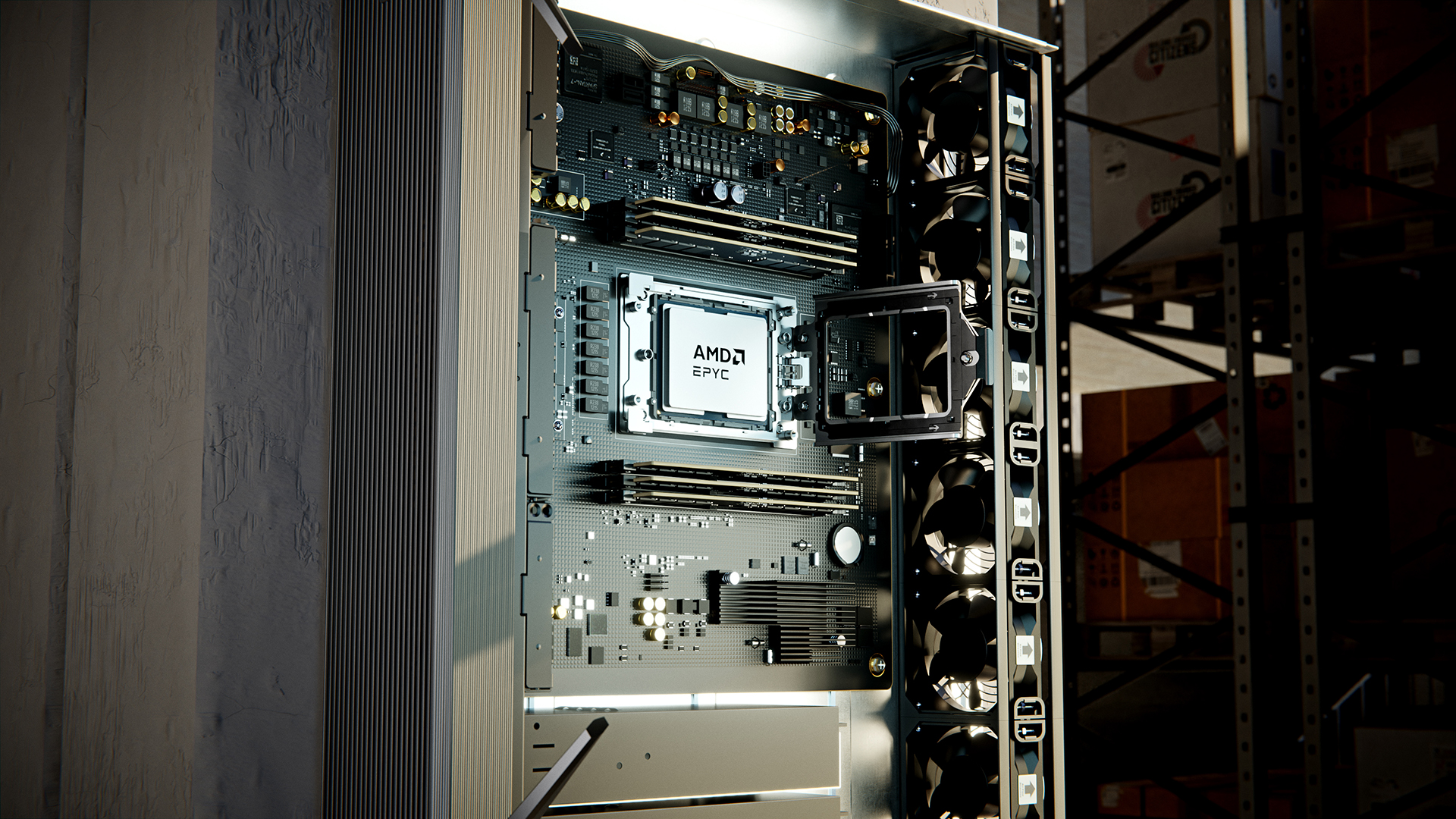
The Lumi-AI supercomputer will be based on the BullSequana XH3500 architecture and powered by AMD Instinct MI430X GPUs and 6th Gen AMD Epyc 256-core processors.
The BullSequana XH3500 platform is designed specifically for “advanced AI workloads”, the company said in a statement.
All told, EuroHPC said the system will deliver a “tenfold increase” in AI capacity and nearly double the high-performance computing (HPC) capability of the existing Lumi supercomputer, also hosted at the Kajaani site.
IBM will also contribute to development of the AI supercomputer, providing storage solutions based on IBM Storage Scale. Nokia, meanwhile, will lead on networking capabilities, leveraging Bull’s BXI interconnect technology for supercomputers and AI HPC workloads.
According to the Lumi consortium, the inclusion of additional compute and storage resources will play a key role in “maximizing” the overall performance and cross-functionality of the system.
“A key differentiator is its multi-tenant architecture, designed to meet the needs of diverse AI communities, combined with extensive API-based access to support modern development environments,” the company said.
Thomas Zacharia, AMD’s SVP for global public sector and strategic partnerships, said the inclusion of Instinct GPUs and Epyc processors marks an “important step” in the chipmaker’s existing relationship with EuroHPC and the Lumi AI Factory consortium..
The existing Lumi supercomputer already features AMD MI250x GPUs and AMD Epyc Milan CPUs.
“Powered by AMD Instinct MI430X GPUs and 6th Gen AMD EPYC CPUs, [Lumi-AI] will strengthen Europe’s sovereign AI capacity, accelerate scientific discovery and give researchers, startups and industry the scale and flexibility to shape Europe’s AI future,” Zacharia commented.
Bull’s first outing
Bull’s selection in the project marks the first major deal for the company after it was renationalized by the French government in March 2026. as part of a €404 million ($406.4 million)deal with Atos Group.
The motive behind the deal primarily centered around protecting French national and technological sovereignty.
At the time, Roland Lescure, French minister for the economy, said the acquisition marked a “decisive milestone for France’s technological sovereignty”.
FOLLOW US ON SOCIAL MEDIA
Follow ITPro on Google News and add us as a preferred source to keep tabs on all our latest news, analysis, views, and reviews.
You can also follow ITPro on LinkedIn, X, Facebook, and BlueSky.


 AMD talks up sustainability efforts with rack-scale energy efficiency gains
 AMD partners with Cerebras for ultra-low latency AI infrastructure
 AMD Advancing AI 2026: Helios on the rise, with launch of new Instinct GPUs
 What to expect at AMD Advancing AI 2026
 Is the Top500 meaningless? Not so, says US national laboratory CTO
 Looking to build an AI data center? Here’s five reasons to go with AMD EPYC CPUs
 How AMD EPYC CPUs and AMD Instinct GPUs are powering the world's HPC facilities


